
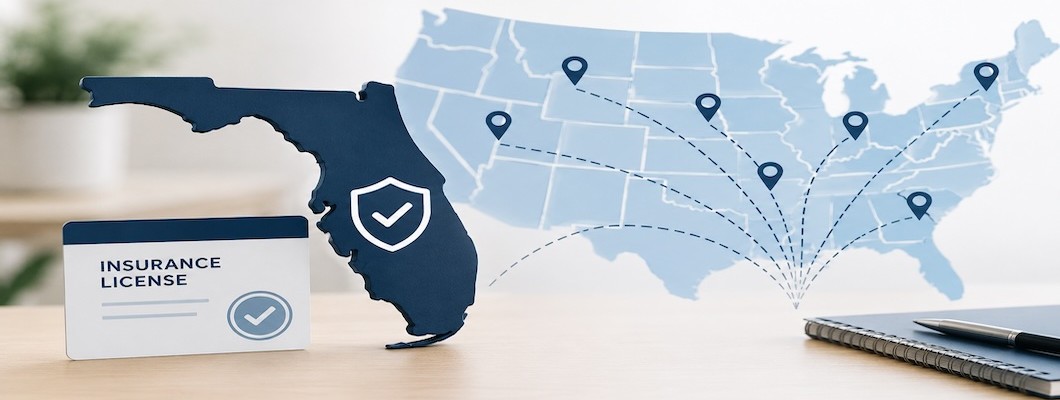
Florida Insurance License Reciprocity: Can You Use Your License in Other States?
One of the biggest advantages of becoming a licensed insurance professional is the ability to serve clients across state lines. If you're considering obtaining a Florida insurance license—or you already have one—you may be wondering whether your license can be used in other states.
Let's take a closer look at how reciprocity works and what it means for your insurance career.
What Is Insurance License Reciprocity?
Insurance license reciprocity is an agreement between states that simplifies the licensing process for insurance professionals who are already licensed in another state.
Rather than completing a new pre-licensing course and passing another state licensing exam, many states allow licensed agents to apply for a non-resident license based on their existing resident license.
This can save time, money, and paperwork when expanding your business into additional states.
Does Florida Have Reciprocity With Other States?
Yes. Florida participates in reciprocal licensing agreements with most states.
If you hold an active Florida resident insurance license and are in good standing, many states allow you to obtain a non-resident license without completing their pre-licensing education requirements or taking another licensing exam.
However, reciprocity rules vary by state and license type.
Before applying for a non-resident license, it's important to verify the specific requirements of the state where you want to conduct business.
What Is a Non-Resident Insurance License?
A non-resident insurance license allows you to sell insurance in a state where you do not maintain residency.
For example, if you live in Florida and hold a Florida 2-15 Health & Life (Including Annuities & Variable Contracts) License, you may be able to obtain non-resident licenses in states such as:
- Georgia
- Texas
- North Carolina
- South Carolina
- Alabama
- Tennessee
And many others.
This allows you to legally solicit, negotiate, and sell insurance products in those states while maintaining Florida as your home-state license.
How Do You Apply for a Non-Resident License?
Step 1: Maintain Your Florida Resident License
Your Florida resident license must remain active and in good standing.
Step 2: Apply Through the Appropriate State
Most states allow you to submit a non-resident license application online.
Step 3: Pay Applicable Fees
Each state charges its own licensing fees.
Step 4: Complete Additional Requirements if Needed
Some states may require:
- Background checks
- Fingerprinting
- State-specific forms
- Additional disclosures
Although many states waive the licensing exam through reciprocity, they may still have administrative requirements.
Are There States That Do Not Offer Full Reciprocity?
Yes.
Some states have unique licensing rules or additional requirements that may apply even if you hold a Florida license.
For example, certain states may require:
- Additional documentation
- State-specific training
- Fingerprints or background reviews
- Appointment requirements before selling insurance
Because regulations change periodically, you should always verify current licensing requirements before applying.
What Are the Benefits of Holding Multiple State Licenses?
Serving More Clients
You can assist clients who relocate or own property in multiple states.
Growing Your Business
A larger geographic footprint can create more sales opportunities.
Working Remotely
Many insurance professionals operate virtually, making multi-state licensing especially valuable.
Increasing Income Potential
The ability to serve clients across multiple states can help expand your book of business and generate additional revenue.
Which Florida Insurance Licenses Can Be Used for Reciprocity?
Many Florida licenses may qualify for non-resident licensing opportunities, including:
- 2-15 Health & Life License
- 2-14 Life Including Variable Annuities License
- 2-40 Health Insurance License
- 4-40 Customer Representative License (depending on state rules)
- 6-20 All-Lines Adjuster License
- Other resident licenses recognized through reciprocal agreements
Keep in mind that each state determines which license classes qualify for reciprocity.
Tips Before Applying in Another State
- Verify state-specific requirements directly with the state's insurance department.
- Confirm your Florida license is active and compliant.
- Complete all Florida continuing education requirements on time.
- Keep your contact information current with licensing authorities.
- Research appointment requirements with insurance carriers.
Taking these steps can help prevent delays in the application process.
The Bottom Line
A Florida insurance license does not automatically allow you to sell insurance in every state. However, thanks to reciprocity agreements and non-resident licensing options, obtaining licenses in additional states is often much easier than starting the licensing process from scratch.
For many insurance professionals, multi-state licensing can open the door to new clients, increased flexibility, and greater earning potential. If you plan to grow your insurance career beyond Florida, understanding reciprocity is an important step toward expanding your opportunities.
Ready to Start Your Florida Insurance Career?
Complete your Florida insurance pre-licensing course and take the first step toward building a career that can grow beyond state lines.
Explore Florida Insurance Courses